Writing your first book
Learn structure on your own pages, not on a worksheet. Every beat comes with a plain explanation and a question to find it, and Dramagi points at the ones your draft hasn't reached yet.
Start with the guidesDramagi maps a novel, screenplay or D&D campaign as moments and the threads between them. Click any moment to see what led to it and where it leads.
Open the full map Free to explore. No account.
Hansel and Gretel · following the trail back
Found
The AI import read it in the text: “…and see if it is properly heated, so that we can put the bread in”
Focused
The witch loses patience, so the oven is lit. It brings out what Gretel needs to see.
Questioned
You rewrote The oven. Does it still bring out Gretel sees the trap?
AI Weakens: the trap is still there, but Gretel needs a clearer moment to see through it.
First, paste the story or upload it.
Hansel and Gretel · short story
Hard by a great forest dwelt a poor wood-cutter with his wife and his two children. The boy was called Hansel and the girl Gretel. He had little to bite and to break, and once when great dearth fell on the land…
Then pick a lens.
| Beat | Moment | Where |
|---|---|---|
| Catalyst | Left by the fire | 23% expected ~10% |
| Midpoint | The kind old woman | 62% expected ~50% |
| All Is Lost | Gretel's despair | 79% expected ~75% |
| Finale | Gretel pushes | 85% expected ~90% |
Then follow one character through all of it.
 Gretel · the hero
Inner arc: Gretel despairs → Gretel must act for herself
Gretel pushesBattle · Truby
Showing causes and effects, 2 steps deep
Look back, ahead, or both.
Causes light up in amber, consequences in indigo. Everything else steps back without disappearing.
Go one step or all the way.
Each step back is marked, so you can see how far a moment sits from what it explains.
Read it through a framework.
The same moment is the Battle in Truby, the Finale in Save the Cat and the Resurrection in the Hero's Journey. Switch lens and nothing is lost.
Pick another moment.
Every moment has its own reasons. These are a few from the same story.
Dramagi reads the whole web and lists the loose threads: choices with no consequence, events with no cause, characters who vanish, secrets with too few clues.
The Sunken Bell, a D&D campaign
Sessions are chapters. Prep is marked planned, branches the party might take are marked possible, and the ones they never took stay on the map, struck through. Every secret is checked against the Three Clue Rule.
The Sunken Bell · 3 sessions played, 1 planned
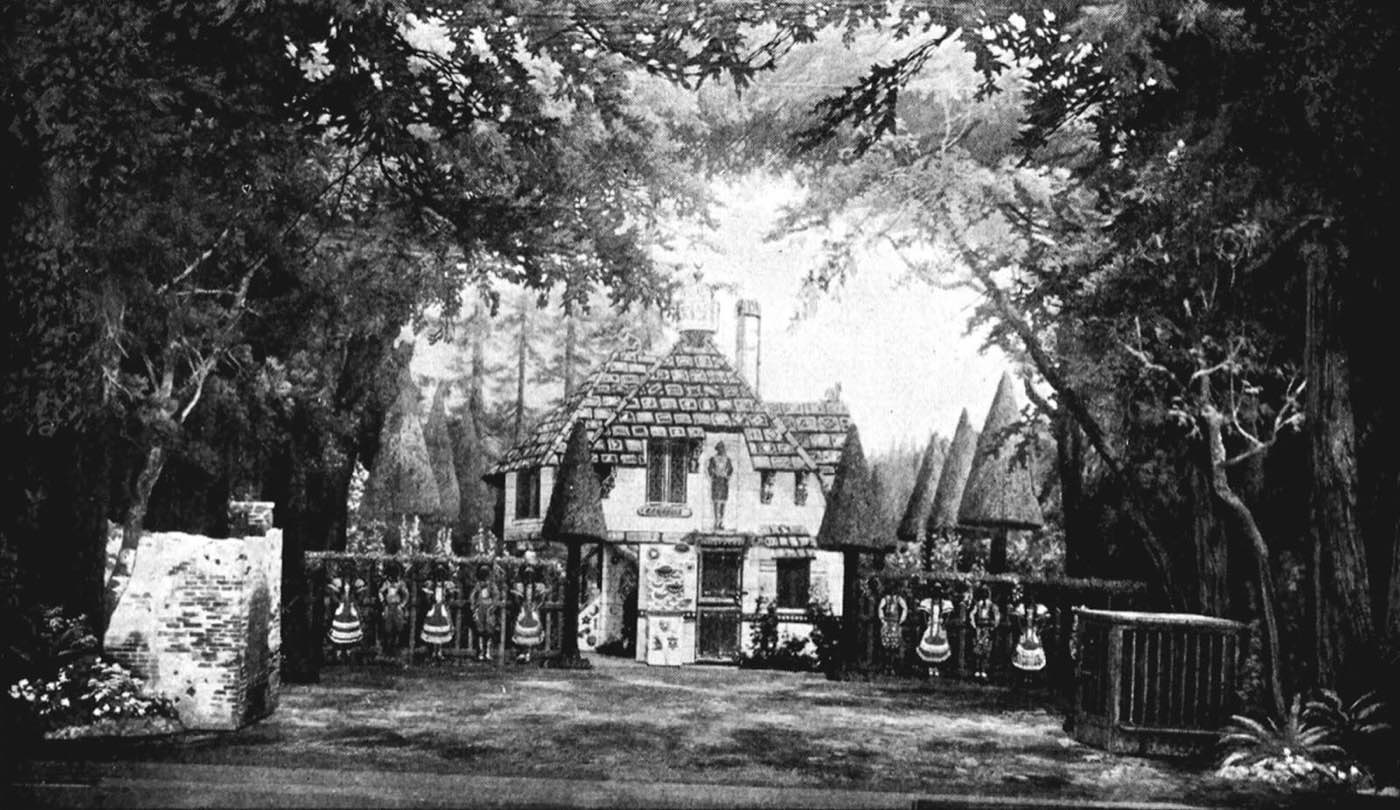
Picture: the witch's house from The Victrola Book of the Opera, 1917. Public domain, via Wikimedia Commons.
Learn structure on your own pages, not on a worksheet. Every beat comes with a plain explanation and a question to find it, and Dramagi points at the ones your draft hasn't reached yet.
Start with the guidesSee what an edit breaks before you make it. Change a scene and every thread that depended on it is questioned, with the AI's first answer. The leads list the setups you never paid off.
See a full map
Sessions, prep and secrets in one map. Mark what's planned and what the party might do instead, and check every secret against the Three Clue Rule before game night.
For game mastersPaste a story in any language and the map comes back in it: moments, summaries, characters and the reasons between them. Quotes stay exactly as you wrote them.
Try it with your text$15a month
500,000 words of AI import a month, up to 60,000 words at a time. Unlimited stories saved to your account, and 500 AI checks of your edits.
Every plan has every feature; they differ in how much AI they include. The demo maps are free.
Choose SagaYes. The demo maps, Hansel and Gretel and the D&D campaign The Sunken Bell, are open to everyone with every feature. You need a plan only to lay out your own stories with AI.
No. Imported text goes only to model providers that don't store it or train on it. Without an account your stories stay in your own browser.
Up to 30,000 words at a time on Scene and up to 60,000 words, a long novella, on Saga and Epic. A longer book can be imported in parts.
Five: John Truby's 22 steps, Blake Snyder's Save the Cat, three-act structure, the Hero's Journey and Dan Harmon's Story Circle. You can switch between them on the same map. Read the framework guides.
Yes. Paste a story in any language and the AI writes the map in that language: moment titles, summaries, the reasons between moments and the characters. Quotes stay exactly as written.
Yes. Sessions become sections of the map, prep is marked planned or possible, and every secret is checked against the Three Clue Rule. A Session view runs the campaign live at the table. More for game masters.
Novels, novellas, short stories, screenplays, plays, series and campaigns. Paste the text or upload a file.
When you change what a moment says, Dramagi asks of each thread that depends on it whether it still holds, weakens or breaks. The AI pre-fills those answers with a reason; you decide.
Paste a chapter, a script or your session notes. The AI lays out the map; then every moment and thread is yours to edit.