Hansel and Gretel, mapped
Abandoned twice in the forest by their starving parents, a brother and sister fall into the hands of a child-eating witch, and the timid sister must save them both.
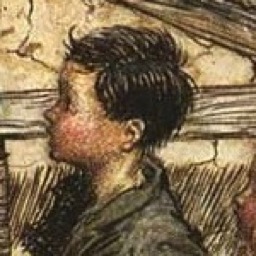 Hansel
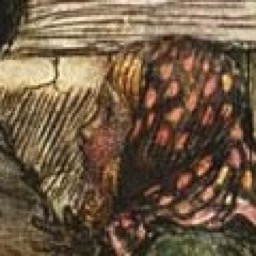 Gretel
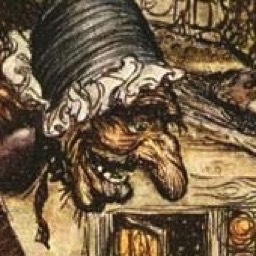 witch
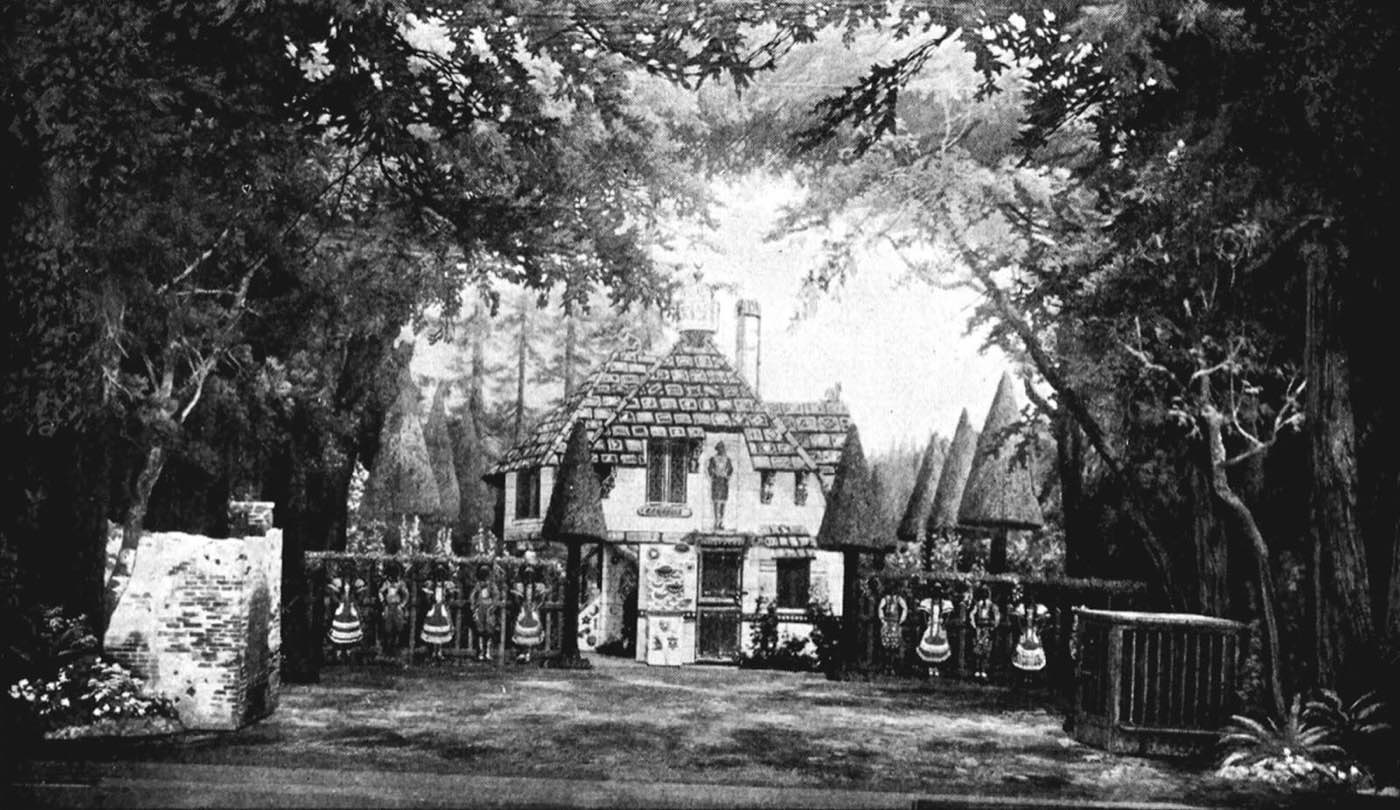
At a glance
- 41 moments: 15 decisions, 8 incidents, 6 revelations and 12 beats.
- 56 causal threads between them, each with a one-line reason.
- 7 characters.
- Laid out with the Truby's 22 steps lens.
Characters
Hansel
Hero
The resourceful older brother. His tricks save them the first time and fail the second.
Wants: To get them both home.
Fears: Being left behind again.
Portrait: Arthur Rackham, 1909 · public domain, via Wikimedia CommonsGretel
Hero
The younger sister. She starts out weeping and relying on Hansel, and ends up saving them both.
Wants: Not to lose her brother.
Fears: That all is over with them.
Portrait: Arthur Rackham, 1909 · public domain, via Wikimedia CommonsThe wood-cutter
Fake ally · wood-cutter
Loves the children but gives in to his wife, twice.
Wants: To keep his children without starving his wife.
Fears: Standing up to his wife.
The stepmother
Opponent
Decides the children must be left in the forest so the parents can survive.
Wants: To survive the famine.
The witch
Opponent · witch
Lures children with a house of bread and cake, then fattens and eats them.
Wants: To fatten and eat children.
Portrait: Arthur Rackham, 1909 · public domain, via Wikimedia CommonsThe snow-white bird
Minor character · bird
Leads the lost children to the witch's house.
The white duck
Ally · duck
Carries the children across the water on the way home.
The story, moment by moment
Each moment lists what led to it and what it leads to. Quotes are from the source text.
A poor wood-cutter's family
A wood-cutter, his wife and two children live by the forest with little to eat.
Hard by a great forest dwelt a poor wood-cutter with his wife and his two children.
Where: The wood-cutter's cottage
- Leave the children in the forest (motivates): They were poor before the famine came.
Leave the children in the forest
In bed at night, the wife proposes getting rid of the children so the two adults can survive.
early tomorrow morning we will take the children out into the forest to where it is the thickest
The stepmother chooses: Take the children deep into the forest and leave them there.
Could have: Share the last bread and risk starving together
With: The stepmother
Where: The wood-cutter's cottage
- Famine (motivates): There isn't enough food for four.
- A poor wood-cutter's family (motivates): They were poor before the famine came.
- The father gives in (motivates): She gives him no peace until he agrees.
- The children overhear (reveals): The children are awake with hunger and hear every word.
The father gives in
He refuses at first, but she gives him no peace until he agrees.
she left him no peace until he consented
The father chooses: Agree to abandon the children.
Could have: Refuse, as he first does
Cost: His children, and his peace of mind.
With: The father
Where: The wood-cutter's cottage
- Leave the children in the forest (motivates): She gives him no peace until he agrees.
- The father gives in (drives)
- Left by the fire (causes)
The children overhear
Too hungry to sleep, the children hear the whole plan. Gretel weeps; Hansel promises to find a way.
had heard what their stepmother had said to their father
Who learns it: the characters and the reader (Hansel and Gretel)
With: Gretel
Where: The wood-cutter's cottage
- Leave the children in the forest (reveals): The children are awake with hunger and hear every word.
- Hansel gathers pebbles (motivates)
Hansel gathers pebbles
In the moonlight the white pebbles shine like silver; Hansel fills his pocket to mark the way home.
Hansel stooped and stuffed the little pocket of his coat with as many as he could get in
Hansel chooses: Sneak out at night and fill his pockets with white pebbles.
Where: The wood-cutter's cottage
- The children overhear (motivates)
- Get home (drives)
- Following the pebbles (sets up): The pebbles dropped on the way in show the way out.
- Better than pebbles (sets up): The pockets that once held pebbles now fill with jewels.
Left by the fire
The parents light a fire in the middle of the forest and leave, with a branch knocking on a tree so it sounds like the father's axe.
lay yourselves down by the fire and rest
With: The father, The stepmother, Hansel and Gretel
Where: The forest
- The father gives in (causes)
- Following the pebbles (causes)
Following the pebbles
When the moon rises, the pebbles shine and show the way.
followed the pebbles which shone like newly-coined silver pieces
Where: The forest
- Hansel gathers pebbles (sets up): The pebbles dropped on the way in show the way out.
- Left by the fire (causes)
- Home again (causes)
Home again
At daybreak they knock on the door. The stepmother scolds; the father rejoices.
by break of day came once more to their father's house
Where: The wood-cutter's cottage
- Following the pebbles (causes)
- Take them farther (motivates): The first attempt failed, so this time she goes farther.
Famine again
Not long after, the famine returns. There is only half a loaf left.
there was once more great dearth throughout the land
Where: The wood-cutter's cottage
- Take them farther (motivates)
Take them farther
This time she plans to go deeper, so there is no coming back.
we will take them farther into the wood, so that they will not find their way out again
The stepmother chooses: Take the children so far into the forest that they can't find their way back.
With: The stepmother
Where: The wood-cutter's cottage
- Famine (motivates)
- Famine again (motivates)
- Home again (motivates): The first attempt failed, so this time she goes farther.
- The father gives in again (motivates)
- They hear it again (reveals)
- The door is locked (causes): Implied: she makes sure there will be no pebbles this time.
The father gives in again
Having given in once, he feels he has to give in again.
as he had yielded the first time, he had to do so a second time
The father chooses: Go along with it a second time.
Could have: Share the last mouthful with his children, as he knows he should
Where: The wood-cutter's cottage
- Take them farther (motivates)
- The father gives in (drives): He who says A must say B.
- Deeper into the forest (causes)
They hear it again
The children are still awake and hear the second plan.
The children, however, were still awake and had heard the conversation
Who learns it: the characters and the reader (Hansel and Gretel)
Where: The wood-cutter's cottage
- Take them farther (reveals)
- A trail of crumbs (motivates)
The door is locked
Hansel tries to collect pebbles again, but the stepmother has locked the door.
the woman had locked the door, and Hansel could not get out
With: The stepmother and Hansel
Where: The wood-cutter's cottage
- Take them farther (causes): Implied: she makes sure there will be no pebbles this time.
- A trail of crumbs (motivates): No pebbles, so he uses the only thing he has.
A trail of crumbs
On the way into the forest Hansel throws crumbs from his tiny piece of bread.
Hansel crumbled his in his pocket, and often stood still and threw a morsel on the ground
Hansel chooses: Crumble his bread and drop it along the path instead of pebbles.
Cost: His only food.
With: Gretel
Where: The forest
- They hear it again (motivates)
- The door is locked (motivates): No pebbles, so he uses the only thing he has.
- Get home (drives)
- Gretel shares her bread (motivates): Hansel has thrown away his own bread.
- The birds ate the crumbs (sets up): The plan that worked with stones fails with bread.
Deeper into the forest
The stepmother leads them deeper than they have ever been and leaves them by a fire.
The woman led the children still deeper into the forest
With: The stepmother, The father, Hansel and Gretel
Where: The forest
- The father gives in again (causes)
- Lost and starving (causes)
The birds ate the crumbs
When the moon rises there are no crumbs: the birds have eaten them all.
the many thousands of birds which fly about in the woods and fields had picked them all up
Where: The forest
- A trail of crumbs (sets up): The plan that worked with stones fails with bread.
- Lost and starving (causes)
Lost and starving
They walk for a night and a day and only get deeper into the forest, living on a few berries.
but they did not get out of the forest, and were very hungry
Where: The forest
- The birds ate the crumbs (causes)
- Deeper into the forest (causes)
- The white bird (enables)
- Eating the house (motivates): Three days with nothing but berries.
The white bird
On the third day a snow-white bird sings to them and leads them to a little house made of bread and cake.
they saw a beautiful snow-white bird sitting on a bough
With: The white bird
Where: The forest
- Lost and starving (enables)
- Eating the house (enables)
Eating the house
Starving, Hansel breaks off the roof and Gretel nibbles the window. When a voice asks who is nibbling, they answer 'the wind' and keep eating.
We will set to work on that,' said Hansel
Hansel chooses: Start eating the house.
With: Gretel
Where: The house of bread
- Lost and starving (motivates): Three days with nothing but berries.
- The white bird (enables)
- The kind old woman (causes)
The kind old woman
An old woman on crutches takes them in, feeds them pancakes and puts them to bed. They think they are in heaven.
do come in, and stay with me. No harm shall happen to you
With: The witch
Where: The house of bread
- Eating the house (causes)
- She is a witch (reveals)
- Hansel in the cage (enables): The welcome was the bait.
She is a witch
The narrator tells us the truth: she built the house to lure children, and she eats them.
she was in reality a wicked witch, who lay in wait for children
Who learns it: only the reader
Where: The house of bread
- The kind old woman (reveals)
Hansel in the cage
At dawn the witch locks Hansel in a stable to be fattened.
carried him into a little stable, and locked him in behind a grated door
Where: The stable
- The kind old woman (enables): The welcome was the bait.
- Gretel made a servant (causes)
- The bone trick (motivates)
Gretel made a servant
Gretel has to cook for her brother so the witch can eat him, and gets only crab-shells herself.
she was forced to do what the wicked witch commanded
Where: The kitchen and the oven
- Hansel in the cage (causes)
- Gretel's despair (causes)
The bone trick
The half-blind witch feels the bone each morning and can't understand why he stays thin. It buys four weeks.
Hansel, however, stretched out a little bone to her
Hansel chooses: Hold out a bone instead of his finger.
With: The witch
Where: The stable
- Hansel in the cage (motivates)
- Fat or lean (causes): He never seems to get fat.
Fat or lean
After four weeks the witch won't wait any longer.
Let Hansel be fat or lean, tomorrow I will kill him, and cook him
The witch chooses: Kill and cook Hansel tomorrow, fat or not.
Where: The kitchen and the oven
- The bone trick (causes): He never seems to get fat.
- Gretel's despair (causes)
- The oven (causes)
Gretel's despair
Fetching the water, Gretel wishes the wild beasts had eaten them so they could at least have died together.
If the wild beasts in the forest had but devoured us
With: Gretel
Where: The kitchen and the oven
- Fat or lean (causes)
- Gretel made a servant (causes)
- Gretel despairs (drives)
The oven
The witch tells Gretel to creep into the hot oven to check it, intending to bake and eat her too.
said the witch, 'and see if it is properly heated, so that we can put the bread in
Where: The kitchen and the oven
- Fat or lean (causes)
- Gretel sees the trap (reveals)
Gretel sees the trap
For the first time Gretel understands what is going on before anyone tells her.
But Gretel saw what she had in mind
Who learns it: the characters and the reader (Gretel)
Where: The kitchen and the oven
- The oven (reveals)
- Playing dumb (motivates)
- Gretel pushes (motivates)
Playing dumb
Gretel turns the witch's own trick around: she asks to be shown.
I do not know how I am to do it; how do I get in?
Gretel chooses: Pretend not to know how to get into the oven.
Where: The kitchen and the oven
- Gretel sees the trap (motivates)
- The witch shows her (causes)
The witch shows her
Calling her a silly goose, the witch puts her own head into the oven.
just look, I can get in myself
With: The witch
Where: The kitchen and the oven
- Playing dumb (causes)
- Gretel pushes (enables)
Gretel pushes
Gretel shoves the witch in, shuts the iron door and runs. The witch burns.
Then Gretel gave her a push that drove her far into it
Gretel chooses: Push the witch into the oven and bolt the door.
Cost: She kills someone.
With: The witch
Where: The kitchen and the oven
- Gretel sees the trap (motivates)
- The witch shows her (enables)
- Gretel frees Hansel (motivates)
Gretel frees Hansel
Gretel opens the cage. Hansel springs out like a bird.
Gretel, however, ran like lightning to Hansel
Gretel chooses: Run to the stable and set Hansel free.
With: Hansel
Where: The stable
- Gretel pushes (motivates)
- "We are saved!" (reveals)
- Better than pebbles (enables)
"We are saved!"
The girl who said 'all is over with us' is now the one announcing the rescue.
Hansel, we are saved! The old witch is dead!
Who learns it: the characters and the reader (Gretel and Hansel)
Where: The stable
- Gretel frees Hansel (reveals)
Better than pebbles
The witch's house is full of pearls and jewels. Both children fill their pockets.
These are far better than pebbles!
Where: The house of bread
- Gretel frees Hansel (enables)
- Hansel gathers pebbles (sets up): The pockets that once held pebbles now fill with jewels.
- The great water (causes): Leaving the witch's forest brings them to the water.
- Perfect happiness (enables): The jewels end the hunger that started everything.
The great water
On the way home a wide stretch of water blocks them, with no bridge or ferry.
they came to a great stretch of water
Where: The great water
- Better than pebbles (causes): Leaving the witch's forest brings them to the water.
- Gretel asks the duck (motivates)
Gretel asks the duck
Where Hansel sees no way across, Gretel finds one.
if I ask her, she will help us over
Gretel chooses: Ask the white duck to carry them across.
With: Hansel
Where: The great water
- The great water (motivates)
- One at a time (enables)
One at a time
Gretel now leads, and thinks of the creature helping them.
that will be too heavy for the little duck
Gretel chooses: Overrule Hansel: the duck should carry them one at a time.
With: The white duck and Hansel
Where: The great water
- Gretel asks the duck (enables)
- Back to father (causes)
Back to father
The forest becomes familiar, they see their house and throw themselves round their father's neck.
threw themselves round their father's neck
With: The father, Hansel and Gretel
Where: The wood-cutter's cottage
- One at a time (causes)
- The stepmother is dead (reveals)
- Perfect happiness (causes)
The stepmother is dead
The tale gives no cause. Many readers see the stepmother and the witch as two faces of the same figure.
the woman, however, was dead
Who learns it: the characters and the reader (Hansel and Gretel)
Where: The wood-cutter's cottage
- Back to father (reveals)
- Perfect happiness (enables)
Perfect happiness
The jewels end the hunger and the family lives together without fear.
Then all anxiety was at an end, and they lived together in perfect happiness
Where: The wood-cutter's cottage
- Back to father (causes)
- The stepmother is dead (enables)
- Better than pebbles (enables): The jewels end the hunger that started everything.
Inner arcs
What drives the characters from inside: their ghost (a wound from the past), weakness, need and desire.
The father gives in
He knows abandoning the children is wrong but can't stand up to his wife. 'He who says A must say B.'
- The father gives in (drives)
- The father gives in again (drives): He who says A must say B.
Gretel despairs
Gretel answers every danger with tears and leaves the solving to Hansel.
- Gretel's despair (drives)
Gretel must act for herself
To survive, Gretel has to stop waiting for Hansel (or God) to save them and take action herself.
Get home
Hansel's goal through the story: find the way back to their father's house.
- Hansel gathers pebbles (drives)
- A trail of crumbs (drives)
Themes
Bread and stones
Hunger runs through the tale: bread rations, a trail of crumbs, a house of bread, an oven for baking. Pebbles lead home once; at the end they are replaced by pearls and jewels that end the hunger.
- A trail of crumbs (echoes)
- Eating the house (echoes)
- The oven (echoes)
- Better than pebbles (echoes)
Who saves whom
The adults who should protect the children feed themselves first. The children survive by looking after each other, and the weaker one becomes the rescuer.
- Gretel shares her bread (echoes)
- Gretel frees Hansel (echoes)
- The father gives in (echoes)
- The kind old woman (echoes): A grown-up who seems to care, and wants to eat them.
- The stepmother is dead (echoes): Both mother figures who wanted the children gone are dead at the end.
Places and world
Famine
A great dearth: there is not enough bread for four people. It drives every adult decision in the tale.
- Leave the children in the forest (motivates): There isn't enough food for four.
- Take them farther (motivates)
The forest
Deeper each time: first a place of abandonment, then of being lost, then the witch's territory.
The wood-cutter's cottage
A poor house at the edge of the great forest, where there is no longer bread for four.
The house of bread
A little house built of bread and covered with cakes, with windows of clear sugar. A trap.
The stable
A little stable behind a grated door, where Hansel is fattened.
The kitchen and the oven
Where Gretel cooks for her brother and the oven is heated.
The great water
A wide stretch of water with no bridge and no ferry, between the witch's forest and home.
Against Truby's 22 steps
Where the Truby's 22 steps beats fall in Hansel and Gretel.
Against Save the Cat
Where the Save the Cat beats fall in Hansel and Gretel.
| Beat | Moment | At |
|---|---|---|
| 1. Opening Image | A poor wood-cutter's family | 0% |
| 3. Set-Up | Famine | – |
| 4. Catalyst | Left by the fire | 22% |
| 5. Debate | The father gives in | 7% |
| 6. Break into Two | A trail of crumbs | 40% |
| 8. Fun and Games | Eating the house | 56% |
| 9. Midpoint | The kind old woman | 62% |
| 10. Bad Guys Close In | Hansel in the cage | 70% |
| 10. Bad Guys Close In | Fat or lean | 77% |
| 11. All Is Lost | Gretel's despair | 79% |
| 13. Break into Three | Gretel sees the trap | 83% |
| 14. Finale | Gretel pushes | 85% |
| 14. Finale | Gretel frees Hansel | 86% |
| 15. Final Image | Perfect happiness | 99% |
Against Three-act structure
Where the Three-act structure beats fall in Hansel and Gretel.
Against The Hero's Journey
Where the The Hero's Journey beats fall in Hansel and Gretel.
Against Dan Harmon's Story Circle
Where the Dan Harmon's Story Circle beats fall in Hansel and Gretel.
| Beat | Moment | At |
|---|---|---|
| 1. You | A poor wood-cutter's family | 0% |
| 2. Need | Hansel gathers pebbles | 12% |
| 3. Go | Left by the fire | 22% |
| 4. Search | A trail of crumbs | 40% |
| 4. Search | The birds ate the crumbs | 48% |
| 5. Find | Eating the house | 56% |
| 6. Take | Hansel in the cage | 70% |
| 7. Return | The great water | 91% |
| 8. Change | Perfect happiness | 99% |
Open threads Dramagi finds
Leads are loose threads: what a writer might have forgotten. Dramagi finds these in this map:
- Goes nowhere: Gretel shares her bread. This choice has no consequence later in the story.
- Goes nowhere: Gretel's despair. Nothing later depends on this.
- Goes nowhere: "We are saved!". Nothing later depends on this.
- Goes nowhere: She is a witch. Only the reader learns this. Fine as dramatic irony; could it also pay off in what happens?
- Beat out of place: The children overhear. At 9%, usually 15–40%. Arrives early.
- Beat out of place: Hansel gathers pebbles. At 12%, usually 15–45%. Arrives early.
- Beat out of place: The father. At 62%, usually 10–55%. Arrives late.
- Comes from nowhere: Famine again. An outside event with no setup. Fine for a catalyst, suspicious later on.
- Character goes missing: The father. Absent for 54% of the story, from 43% to 97%.
- Missing beat: Attack by ally. Which ally confronts the hero about how they are behaving?
- Missing beat: Second revelation and decision. What does the hero discover that makes them push harder?